 CIVAGO
22 oz
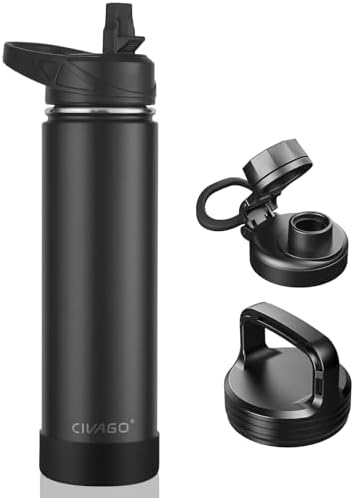
22 oz steel, three lids
Built with a 22 oz double wall stainless steel body, three distinct lids, and a durable powder coated grip.
2 finishes
$18.99 to $23.99●●●●●4.6(11,944)
Body notes
Steel and glass handle water differently throughout the day. We build our steel line with two walls and a vacuum to keep water cold for up to 24 hours. We build our glass line from borosilicate inside a silicone sleeve. Each material has practical trades in daily use.
Our steel bottles use two walls of 304 stainless steel with the air pulled out between them. Because warmth needs matter to travel through, the empty space between the walls slows heat transfer down to a crawl. Cold water stays cold inside a steel body for up to 24 hours. The outer wall receives a powder coat finish that gives your palm purchase when the bottle is full. You cannot see the water line through the metal, so you gauge how much is left by lifting the body. Steel does not chip when set down hard on concrete.
Borosilicate glass does not insulate your water. We do not claim any hours of cold for our glass line because a single wall of glass lets room warmth pass straight into the liquid. The silicone sleeve over the body adds grip and cushions light bumps against a tabletop, but the sleeve is not thermal insulation. Glass gives you an immediate view of the water level without opening the lid. It carries no taste of its own and washes clean without holding odors from previous fills. If you want plain cold water from a tap, glass works.
Every material reacts to a fall in its own way. When a steel body hits a tile floor, the metal might dent or scuff its powder coat, but the bottle stays in one piece and holds water. Glass behaves differently. Borosilicate is sturdy against heat shifts, but it is not unbreakable. If a glass bottle drops off a desk onto a hard floor, it can crack or shatter inside the silicone sleeve. The sleeve cushions daily handling, yet it cannot stop a hard strike from breaking the wall underneath. Choose steel if your gear takes direct abuse.
A full 64 ounce bottle has real heft in your hand. Our glass line comes in 24, 32, 40, and 64 ounces, wrapped in silicone to stop wet hands from sliding on the smooth surface. One glass line adds an insulated carry sling with a strap to make moving a heavy fill easier. That sling helps you carry the weight, but the glass inside remains uninsulated. Our steel line spans seven sizes from 20 ounces up to 128 ounces. The steel handles and lid threads manage the load when you lift a heavy multi-quart fill.
Both materials need regular care to stay fresh. Odors and film start when gaskets, spouts, and straw interiors are left damp inside a closed lid. Take the silicone gasket off the lid during washing and let it air out completely before you assemble the parts again. Steel bodies take longer to dry inside because you cannot see into the base clearly, while clear glass shows water spots and film immediately. If the threads collect dust or grit, wipe them dry so the gasket can seat flat against the rim without binding.
Pick steel if you need water to stay cold for up to 24 hours or if your gear gets knocked off tables. The metal takes dents without breaking. Pick glass if you want to see your water level at a glance and prefer drinking from a smooth surface that rinses clear. Both use durable gaskets that seal tight when threads stay clean.
Named in this note
Built with a 22 oz double wall stainless steel body, three distinct lids, and a durable powder coated grip.
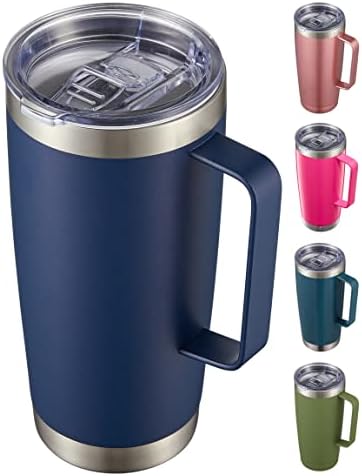
A 20 oz stainless steel tumbler built with a solid side handle, double wall vacuum insulation, and a slider lid with two straws.
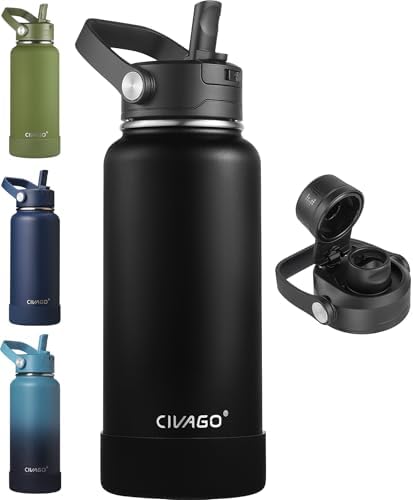
Built with a 32 oz double wall body, two leakproof lids, a removable straw, and a silicone boot for daily use.
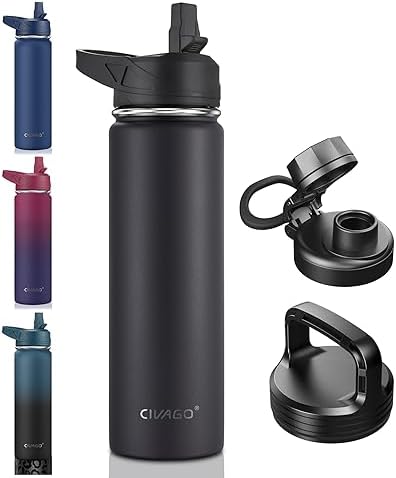
We build this 24 oz stainless steel bottle with three separate lids, double wall vacuum insulation, and a matte powder coat.
Keep reading
Fill notes
A photograph does not show how heavy a full bottle feels in the hand. We build seven capacities across our lines.
Read itLid notes
A steel or glass shell holds water, but the lid sets how you drink it. We build six lines around distinct lid systems, from upright straws and pour spouts to plain carry caps.
Read itCare notes
A bottle lid holds several small surfaces where water sits. Straws collect film, threads catch moisture, and damp gaskets take on a sour smell when closed up wet.
Read itWeight notes
When a bottle holds 64 or 128 ounces, the water inside changes how you move. You stop carrying it in a hand and start setting it down between drinks.
Read itAnswer three questions and see which bottles survive them.