 CIVAGO
22 oz
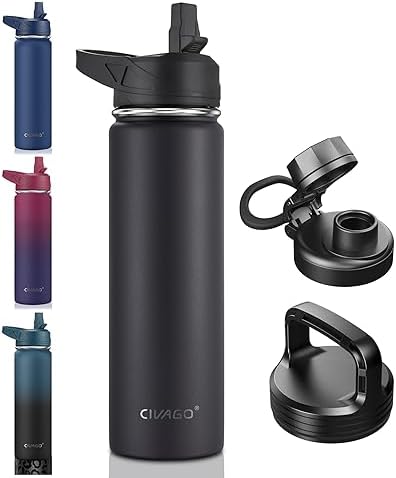
22 oz steel, three lids
Built with a 22 oz double wall stainless steel body, three distinct lids, and a durable powder coated grip.
2 finishes
$18.99 to $23.99●●●●●4.6(11,944)
Care notes
A bottle lid holds several small surfaces where water sits. Straws collect film, threads catch moisture, and damp gaskets take on a sour smell when closed up wet. Washing these parts takes a few minutes if you pull them apart and let them dry before putting them back together.
Water moves straight through the straw, across the spout, and past the flexible gasket that sits under the cap. Some of that water climbs into the channels around the thread every time you drink or tip the bottle. Those screw grooves look clean on the outside because you wipe the rim, but moisture stays trapped between the tight plastic turns. When a bottle stays shut for days, that trapped water cannot evaporate. It sits against the seal until you smell it the next time you turn the cap. Taking the lid off lets the air reach those wet spots.
Pull the straw straight out of the lid before you run the tap. Rinse through the tube from end to end so water pushes out the film that builds on the inside of a straw over time. Use a small brush through the tube if that film has started to cloud the plastic. Wash the mouth of the bottle and scrub the screw tracks by hand with warm water and soap. Wipe around the soft gasket where it meets the hard rim of the cap. A quick rinse over the top leaves the narrow grooves dirty.
Stand the body, the cap, and the straw apart on a dry rack after you finish washing them. A straw left sitting in a closed lid never dries out because no fresh air gets inside the barrel. If you screw a damp lid onto a wet neck, you lock moisture against the seal and a stale smell forms by morning. Let the open mouth face up or lean on an angle so air circulates to the bottom. Put the lid back together and screw it onto the neck only after every surface is dry to the touch.
Keep an insulated steel vacuum body out of the dishwasher. The heat cycles can ruin the seal that keeps the double wall working. Our glass bottles hold cool water well, but you should not pour water straight off the boil into them because rapid heat changes can crack the base. Do not put a full bottle of any material into the freezer. Water swells as it freezes and will warp a steel base or shatter a glass cylinder from the inside out. Hand washing with warm water keeps the parts true to shape.
A sealed bottle left inside a hot car warms up quickly and builds pressure against the gasket. When that air expands with nowhere to go, it pushes against the inner rim and makes the cap hard to turn, or it spits a few drops when you flip the spout open. Loosen the lid half a turn if the bottle has to sit in a closed car for the afternoon. If you drop a glass bottle on a hard floor it can break, so keep the silicone sleeve pulled snug over the base.
Taking the straw and the gasket apart takes seconds, and it stops old water from lingering in the threads. Wash the pieces by hand, leave them open until the moisture is gone, and keep the body out of extreme heat or the freezer. That routine keeps the water tasting clean every time you fill up.
Named in this note
Built with a 22 oz double wall stainless steel body, three distinct lids, and a durable powder coated grip.
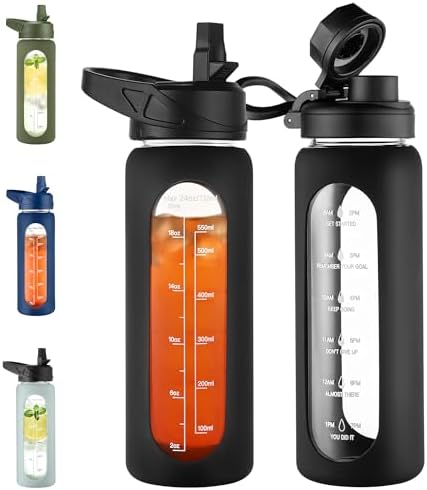
A 24 oz borosilicate glass bottle wrapped in a protective sleeve, built with time markers and two interchangeable lids.
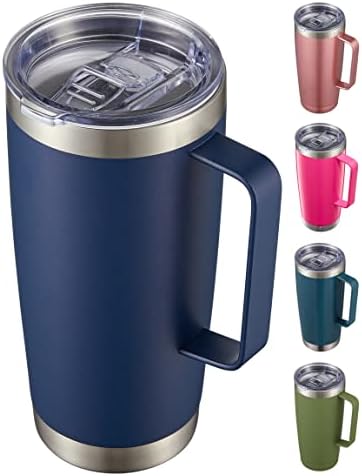
A 20 oz stainless steel tumbler built with a solid side handle, double wall vacuum insulation, and a slider lid with two straws.
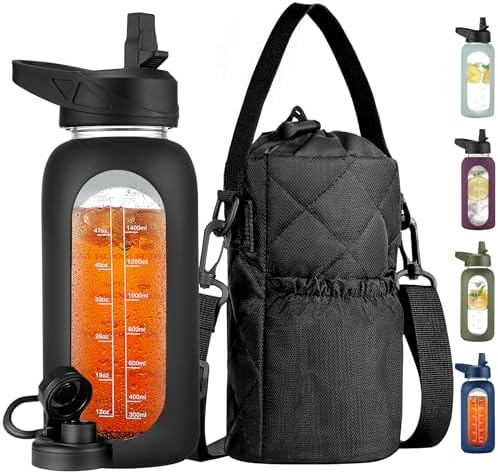
A 32 oz borosilicate glass bottle fitted with an insulated carry holder, two lid options, and hourly volume markings on the side.
Keep reading
Fill notes
A photograph does not show how heavy a full bottle feels in the hand. We build seven capacities across our lines.
Read itBody notes
Steel and glass handle water differently throughout the day. We build our steel line with two walls and a vacuum to keep water cold for up to 24 hours.
Read itLid notes
A steel or glass shell holds water, but the lid sets how you drink it. We build six lines around distinct lid systems, from upright straws and pour spouts to plain carry caps.
Read itWeight notes
When a bottle holds 64 or 128 ounces, the water inside changes how you move. You stop carrying it in a hand and start setting it down between drinks.
Read itAnswer three questions and see which bottles survive them.