 CIVAGO
64 oz
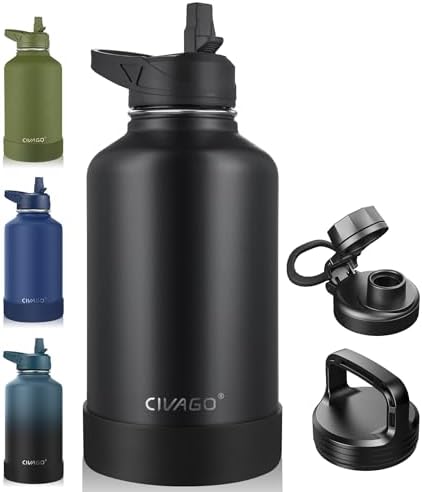
64 oz steel, three lids
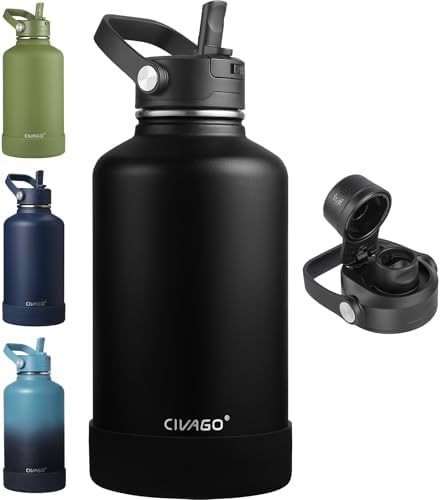
Double-wall steel holds 64 oz cold for 24 hours, paired with three interchangeable lids and a durable powder coat.
6 finishes
$26.99 to $35.99●●●●●4.6(11,944)
Weight notes
When a bottle holds 64 or 128 ounces, the water inside changes how you move. You stop carrying it in a hand and start setting it down between drinks. Here is how our largest steel and glass bodies work across a long day away from a tap.
A full gallon is heavy enough that your wrist notices the lift every time. You do not hold a body this size while you walk. It sits on a floorboard, rests beside a workbench, or stays on the corner of a solid table until you need a drink. Our steel vacuum build keeps that volume cold for up to 24 hours, which matters when the day is hot and the bottle stays put on concrete. Lifting it with one hand takes effort. The weight settles in your forearm and shoulder, so drinking from it is a deliberate two-handed action rather than a quick sip.
At 64 ounces and above, a handle is not an extra feature. It is how the bottle travels from a sink to where you work. A full body swinging from fingers pulls hard, so our handles give you a broad grip that does not pinch. You pick it up, carry it to your station, and set it down. That is the whole movement. If you need to carry a full vessel for miles on foot, a gallon will tire your arm out fast. These large sizes are made for people who travel to a spot, drop their gear, and stay there.
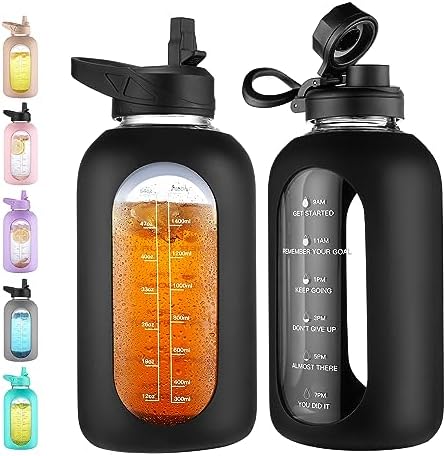
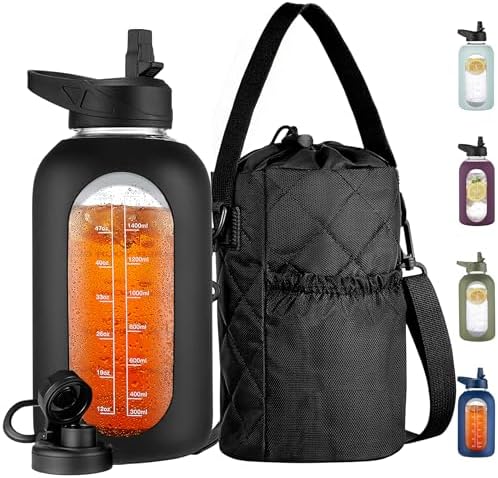
We print hour marks down some of our 64 ounce glass bodies so you can see how much water remains. They show your progress through a fill at a glance. They are a marker of where the water level sits against the daylight, not an order to drink on a schedule. Glass gives you that clear view through the wall, though it offers no insulation. If you drop an uninsulated glass body on gravel or tile, the wall can crack. The silicone sleeve adds grip and softens a landing on wood, but the glass inside remains glass.
A 128 ounce steel bottle suits someone whose work keeps them far from running water. A road crew on an open stretch, a carpenter on a rough framing site, or someone running equipment in the back of a yard needs water on hand. Walking back to a kitchen or a faucet every hour burns time you do not have. Filling a whole gallon once in the morning solves that problem. You trade portability for capacity, ending the day with cold water still in the base without having to hunt for a refill.
Most people are better served by a smaller body. If you sit ten steps from a clean tap, hauling a heavy gallon around is unnecessary labor. A 24 or 32 ounce bottle refills in seconds, cleans faster under a standard faucet, and puts far less strain on your shoulder during a commute. Big bodies also take longer to wash. Reaching the bottom of a deep cavity requires a long brush, and drying the interior takes patience. If you do not have a clear reason to haul that much water, pick a lighter size.
Match the bottle to the distance between you and a water supply. If you work near a sink, pick a lighter size that rinses quickly. If you spend your shift far from any faucet, our 64 and 128 ounce bodies hold what you need for the duration.
Named in this note
Double-wall steel holds 64 oz cold for 24 hours, paired with three interchangeable lids and a durable powder coat.
Borosilicate glass holds a full 64 oz inside a protective silicone sleeve, finished with time marks and two lid styles.
Our 64 oz borosilicate glass bottle features printed time markers, two interchangeable lids, and an insulated carry sleeve.
We build this 64 oz vacuum bottle with a heavy steel body, two interchangeable lids, and a removable internal straw.
Keep reading
Fill notes
A photograph does not show how heavy a full bottle feels in the hand. We build seven capacities across our lines.
Read itBody notes
Steel and glass handle water differently throughout the day. We build our steel line with two walls and a vacuum to keep water cold for up to 24 hours.
Read itLid notes
A steel or glass shell holds water, but the lid sets how you drink it. We build six lines around distinct lid systems, from upright straws and pour spouts to plain carry caps.
Read itCare notes
A bottle lid holds several small surfaces where water sits. Straws collect film, threads catch moisture, and damp gaskets take on a sour smell when closed up wet.
Read itAnswer three questions and see which bottles survive them.