 CIVAGO
24 oz
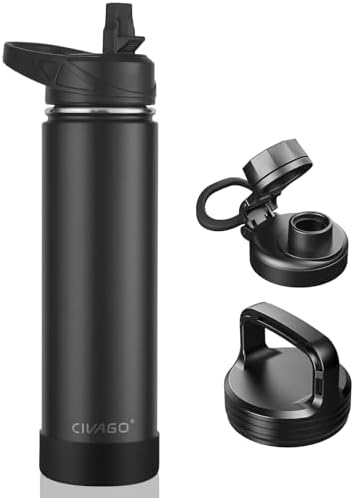
24 oz steel, three lids
We build this 24 oz stainless steel bottle with three separate lids, double wall vacuum insulation, and a matte powder coat.
5 finishes
$18.99 to $25.99●●●●●4.6(11,944)
Fill notes
A photograph does not show how heavy a full bottle feels in the hand. We build seven capacities across our lines. Picking the right one comes down to how far you sit from a tap, how often you want to refill, and how much water you want to carry at once.
A 20 ounce or 22 ounce bottle holds enough water for a short stretch. You drink it down, walk to the sink, and fill it again. That small body is light to hold. If your desk sits near a clean tap, refilling two or three times is no trouble at all. A 64 ounce or 128 ounce body solves the opposite problem. On a work site or a long drive without running water, that big volume carries you through the entire day on one fill. You trade away the light weight to avoid running dry when no tap is near.
Water is heavy. A full 128 ounce steel jug takes effort to lift with one hand, especially when tipped toward your mouth. We put wide handles on our largest bodies for that reason. The smallest 20 ounce steel bottle barely pulls on your wrist when full. When you choose a capacity, you choose how much weight to haul between fills. A large bottle saves you trips to the tap, but you feel that saved time in your shoulder every minute you carry the bottle. A smaller bottle makes you walk more often, but it handles easily all day.
The 24 ounce, 32 ounce, and 40 ounce sizes sit between the two extremes. A 32 ounce fill covers several hours of work without feeling like a brick in your grip. Our 24 ounce size comes in both insulated steel and glass, giving you a choice of material for ordinary daily use. The 40 ounce body holds enough water for an entire afternoon away from your desk, yet it remains manageable to carry across a room. People often settle on these middle sizes because they balance weight against the frequency of walking to a water source.
Our steel line spans 20, 22, 24, 32, 40, 64, and 128 ounces. These vacuum bodies keep water cold for up to 24 hours. That insulation matters more when a fill has to last all day. If you carry a 64 ounce steel body into the heat, the water inside stays cold through the final sip hours later. If you use a 20 ounce steel body at an indoor desk, the insulation keeps ice from melting before you finish the small volume. The metal wall adds weight, but it protects the water temperature until the body runs empty.
We build glass bottles in 24, 32, 40, and 64 ounces. Glass carries no vacuum insulation, so it does not hold temperature for hours. It works well where cold taps are plentiful and the bottle gets washed frequently. The surface does not hold smells, and the clear body lets you see when a film starts to build inside. A silicone sleeve gives the glass body grip on a desk. Glass is not unbreakable, so dropping a full 64 ounce glass body on a hard floor can break the base. It belongs near steady tables and easy taps.
A bottle you refill four times is not worse than one you fill once. It is a lighter tool for a place with running water. Pick a large steel body if you work far from a tap and need cold water all day. Pick a smaller glass or steel bottle if you prefer a light grip and sit near a sink.
Named in this note
We build this 24 oz stainless steel bottle with three separate lids, double wall vacuum insulation, and a matte powder coat.
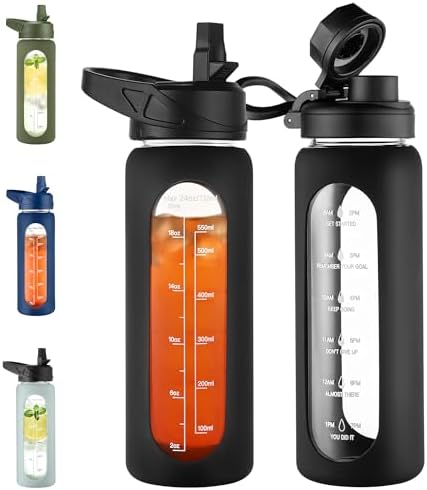
A 24 oz borosilicate glass bottle wrapped in a protective sleeve, built with time markers and two interchangeable lids.
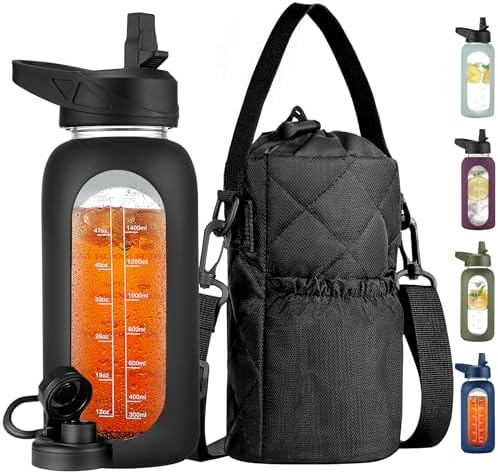
A 32 oz borosilicate glass bottle fitted with an insulated carry holder, two lid options, and hourly volume markings on the side.
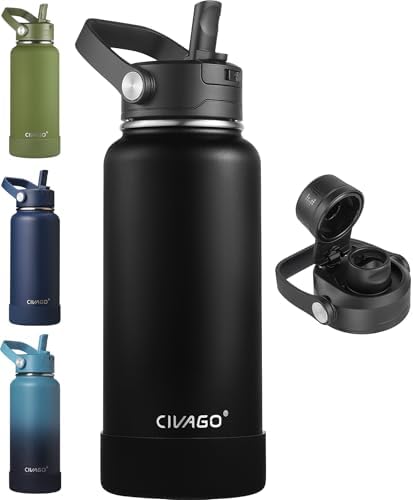
Built with a 32 oz double wall body, two leakproof lids, a removable straw, and a silicone boot for daily use.
Keep reading
Body notes
Steel and glass handle water differently throughout the day. We build our steel line with two walls and a vacuum to keep water cold for up to 24 hours.
Read itLid notes
A steel or glass shell holds water, but the lid sets how you drink it. We build six lines around distinct lid systems, from upright straws and pour spouts to plain carry caps.
Read itCare notes
A bottle lid holds several small surfaces where water sits. Straws collect film, threads catch moisture, and damp gaskets take on a sour smell when closed up wet.
Read itWeight notes
When a bottle holds 64 or 128 ounces, the water inside changes how you move. You stop carrying it in a hand and start setting it down between drinks.
Read it